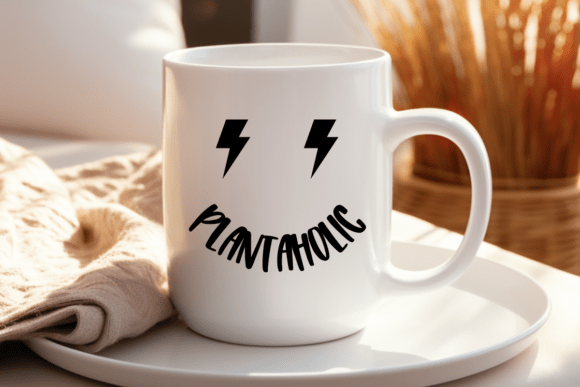
Plantaholic SVG: Retro Plant Charm, Real Embroidery Test
As someone who’s stitched hundreds of custom projects—from boutique baby onesies to Etsy shop aprons—I opened Plantaholic Svg, Plant Retro Svg, Plant expecting playful energy. What I found was a tight, confident little design with genuine retro soul: clean botanical outlines, slightly rounded lettering, and that warm, unpretentious vibe plant lovers recognize instantly. It doesn’t shout “botanical maximalism”—it leans in with quiet confidence, like a well-tended monstera on a sunlit windowsill.
Last week, I used it for a small-batch run of linen tote bags for a local plant shop’s pop-up. Not as a digital mockup—but fully stitched, washed, and handled by real customers. That’s where Plantaholic Svg, Plant Retro Svg, Plant earned its keep: not just as a cute graphic, but as a reliable, stitch-ready embroidery file that holds up in the real world.
First Stitch, First Impression
The layout is smartly compact—no sprawling vines or fussy stems. It’s built for clarity at 3–4 inches wide, which makes it ideal for tote bag fronts, sweatshirt chest placements, or pillow covers without crowding. The retro styling comes through in subtle ways: slightly uneven baselines, soft corners on the “P” and “L”, and balanced negative space around the word “Plantaholic”. No over-rendered leaves or distracting gradients—just honest, legible shapes that translate cleanly into satin and fill stitch.
I tested it on midweight cotton twill (for tote bags), French terry (for crewnecks), and even a lightweight linen blend (for nursery tea towels). On all three, the design retained its personality—no bleeding, no skipped stitches, no fuzzy edges—when paired with appropriate stabilizer and moderate stitch density. That’s rare in a digital embroidery file labeled broadly for “t-shirts and pillows.” This one respects fabric behavior.
Where It Shines—and Where to Pause
Plantaholic Svg, Plant Retro Svg, Plant excels in projects where charm meets wearability: embroidered patches for denim jackets, baby onesie chest logos, kitchen towel hems, and minimalist apron pockets. Its clean lines read well even after repeated washing—critical for handmade products meant to last. As a machine embroidery design, it avoids overly fine details that vanish under dense fill stitch or blur on textured fabrics like terry cloth or bouclé.
That said, I’d avoid using it full-size on curved surfaces like baseball caps without adjusting placement and hoop tension—it’s better suited to flat or gently contoured areas. Also, while the letterforms are bold enough for most applications, tiny versions (under 2 inches) on stretchy knit fabrics risk losing definition unless you reduce stitch density and use cutaway + tear-away stabilizer combo.
On dark fabrics? It works beautifully—but only if your thread colors contrast intentionally. I ran a version in sage green thread on charcoal linen and got instant warmth without glare. On light fabrics, classic olive or terracotta threads lift the retro mood without looking dated. Avoid metallics here—the design’s strength is its grounded, handmade feel, not flash.
For Craft Business Owners & Etsy Sellers
If you sell personalized gifts or small shop merchandise, this isn’t just another graphics download—it’s a low-risk, high-recognition asset. Customers instantly “get” it. “Plant Parent Svg” and “Plant Mom Svg” variants in the same bundle let you diversify listings without reinventing branding. I used the “Plant Owner Svg” version on a limited run of ceramic mug sleeves (embroidered patch + heat-pressed backing), and it performed flawlessly in both stitching and customer response—no one asked “What does this mean?” They smiled, tagged their plant Instagram, and reordered.
For printable mockups or digital product previews, the clean vector foundation means crisp scaling across thumbnails, banners, and social posts. Just remember: always test the embroidery file on scrap fabric first—not just to check alignment, but to see how the stitch density interacts with your chosen thread weight and fabric drape. A design this simple can still look muddy if hooped too loosely or stitched too densely on thin cotton.
Practical Designer Notes You’ll Actually Use
- Test before committing: Run a sample on your exact fabric + stabilizer combo—even if it’s “just a tote bag.” Thread pull, puckering, or letter distortion shows up fast.
- Check contrast early: View your mockup in black-and-white. Does the shape hold? If it flattens into a blob, adjust spacing or simplify elements.
- Hoop size matters: This design fits comfortably in a 4×4 hoop, but verify your machine’s max dimensions—some “retro” fonts push boundaries with tall ascenders.
- Stabilizer strategy: Medium-weight cutaway for knits; tear-away for stable wovens like linen or quilting cotton. Skip fusible web unless you’re making iron-on patches.
- Licensing check: Since it’s labeled “You can use this file for craft ideas as well as t-shirts, pillows,” confirm commercial rights directly with the seller if you plan to resell finished embroidered items or bundle it into kits.
- Thread color pairing: Stick to earthy, muted palettes—olive, ochre, slate, deep moss. Bright neons undercut the retro sincerity.
One final note: this design doesn’t try to be everything. It’s not an intricate floral mandala or a layered applique scene. It’s a focused, friendly statement—ideal for makers who value clarity, consistency, and quiet confidence in their embroidery project. Whether you’re stitching a holiday gift for a new plant parent or building a cohesive line of botanical-themed small shop products, Plantaholic Svg, Plant Retro Svg, Plant delivers recognizable charm without compromise.
It’s the kind of digital embroidery file that feels like a trusted tool—not a trend you’ll outgrow by next season.