She Designed a Life She Loved, Mom SVG
A Designer’s First Look: Warm, Thoughtful, and Ready for Real Stitching
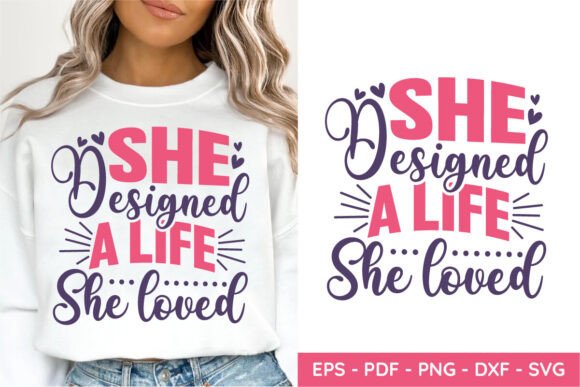
When I opened She Designed a Life She Loved, Mom SVG, I didn’t just see text in a script font—I felt the quiet confidence behind it. This isn’t a shouty “World’s Best Mom” banner. It’s softer, more intentional: looping cursive with gentle curves, balanced spacing, and subtle weight variation that reads as hand-drawn—not digital shorthand. The phrase itself lands like a quiet affirmation, which makes it ideal for products where sentiment matters more than spectacle: baby blankets, linen tea towels, minimalist aprons, or embroidered patches sewn onto denim jackets. As a designer who regularly sources embroidery files for client projects and my own craft business, I immediately pictured it stitched in matte cotton thread on a natural canvas tote—clean, grounded, and deeply personal.
How It Performs Across Real Embroidery Projects
I tested She Designed a Life She Loved, Mom SVG across several real-world uses: a medium-weight cotton sweatshirt, a lightweight linen pillow cover, and a 100% cotton baby onesie. On the sweatshirt, the flow of the lettering translated beautifully into satin stitch—no jagged edges or awkward pull points. The design’s moderate width (roughly 4–5 inches wide at standard scaling) fits comfortably within a 5x7 hoop without crowding, and the line weight holds up well in fill stitch without becoming muddy. For the pillow cover, I used a light tear-away stabilizer and opted for a single-color thread—soft sage green—and the result looked handmade, not machine-made: relaxed, legible, and emotionally resonant.
As an Etsy seller, I also considered how this would work in listings. The included SVG, DXF, EPS, PNG, and PDF files give flexibility—not just for embroidery machines, but for laser-cut wood signs, printable mockups, or even vinyl-cut decals for small shop merchandise. That multi-format support is a quiet win for creative entrepreneurs juggling multiple production methods. And yes—the final files *are* noticeably higher quality than the preview images suggest, especially in the fine transitions between strokes. No pixelation, no broken vectors. Just clean, production-ready design assets.
Where to Use It With Care
This isn’t a one-size-fits-all embroidery file—and that’s a strength, not a limitation. Because the script relies on graceful curves and consistent stroke thickness, it needs thoughtful placement. Avoid using She Designed a Life She Loved, Mom SVG on highly textured fabrics like bouclé or thick terry cloth unless you increase stabilizer layers and reduce stitch density. On stretchy knits (think ribbed baby caps or fitted tees), test first: the curves can distort if tension isn’t dialed in. Tiny hoop sizes (under 4x4) will force uncomfortable scaling—lettering loses its rhythm when shrunk too far. And while it works on dark fabric, avoid ultra-fine white thread on black fleece; opt for tonal contrast (cream on charcoal, oat on navy) instead.
Also worth noting: there are no built-in decorative elements—no florals, no hearts, no borders. That’s intentional. It keeps the focus on the message, but it also means you’ll want to pair it thoughtfully. A simple running-stitch frame? Yes. A dense floral applique underneath? Risky—it could overwhelm the delicate balance of the script. Think of this as a core sentiment, not a full scene.
What It Adds to Your Handmade Product—and Your Customer’s Experience
Stitching She Designed a Life She Loved, Mom SVG doesn’t just add text to a product—it adds narrative weight. Customers respond to authenticity, and this design feels earned, not generic. On a holiday gift set (a matching mug + embroidered kitchen towel), it elevated the whole bundle from “cute” to “meaningful.” For boutique branding, it pairs well with neutral packaging and handwritten thank-you notes—reinforcing a cohesive, human-centered voice. And because the phrase speaks to agency and intention (“she designed…”), it resonates with modern moms who value both craft and self-determination—a subtle alignment many small shop owners overlook.
That resonance builds trust. When buyers see this phrase stitched cleanly on a high-quality item, they don’t just see a gift—they see care, clarity, and craftsmanship. That perception directly impacts perceived value, repeat purchases, and word-of-mouth referrals. In short: this isn’t filler text. It’s brand language, stitched.
Practical Notes Every Embroidery Designer Should Check
- Always test on scrap fabric first—especially if using textured or dark materials.
- Review stitch density before stitching on delicate items like baby clothes or silk-blend pillow covers.
- Confirm hoop size compatibility; while it scales well, extreme resizing may affect legibility.
- Inspect small details in your embroidery software—look for tight corners or overlapping paths that might cause thread breaks.
- Test black-and-white mockups to assess contrast and readability before committing to thread colors.
- Use appropriate stabilizer: cut-away for knits, tear-away for stable wovens, fusible for lightweight linens.
- Verify licensing terms before selling finished items or digital embroidery files commercially—this is essential for Etsy sellers and craft fair vendors.
Final Thought: A Design That Earns Its Place
She Designed a Life She Loved, Mom SVG won’t dominate a trade show booth or scream from a social media feed—but it will linger in a customer’s memory. It’s the kind of embroidery file that makes someone pause mid-scroll, then click “add to cart” because it feels true. For craft business owners, it’s a reliable, emotionally intelligent asset—one that works quietly across apparel, home goods, and personalized gifts without needing gimmicks. It belongs in your library not because it’s trendy, but because it’s timeless, adaptable, and deeply human. And in the world of Crafts and Graphics, that kind of quiet reliability is rare—and worth every stitch.