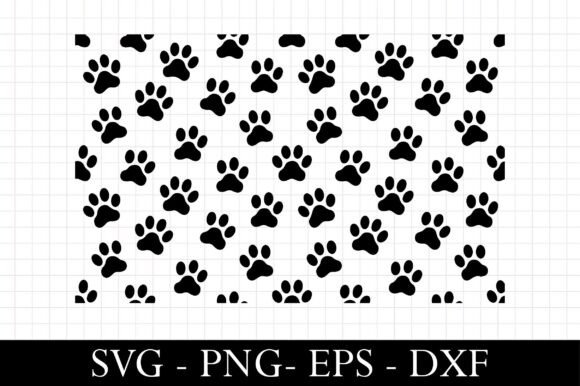
Dog Paw Seamless Pattern, Paw Print SVG
First Impressions: Simple, Sweet, and Surprisingly Versatile
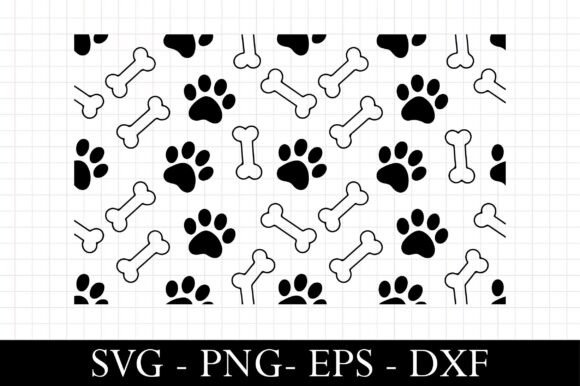
When I opened Dog Paw Seamless Pattern, Paw Print SVG, I wasn’t expecting much beyond a basic repeat — but it surprised me. The paw prints are clean, slightly rounded, and spaced with just enough breathing room to feel intentional, not crowded. There’s no clutter, no unnecessary embellishment — just confident negative space and a gentle rhythm that reads as friendly, warm, and quietly professional. It doesn’t scream “cute overload.” Instead, it feels like something you’d choose for a boutique baby onesie or a linen kitchen towel meant to last years. That restraint is rare in dog-themed embroidery files — and it’s exactly why this one stands out in the Crafts category.
Real-World Test: Embroidering a Linen Tote Bag for a Local Pet Rescue Pop-Up
Last month, I used Dog Paw Seamless Pattern, Paw Print SVG to create a limited-run embroidered tote for a neighborhood dog rescue’s holiday fundraiser. We chose natural unbleached linen — textured, slightly uneven, and unforgiving under dense stitching. Before hooping, I converted the SVG into a machine embroidery design using my standard workflow (no auto-trace needed — the vector paths were crisp and closed). The seamless repeat translated cleanly into a 4" × 4" fill area across the tote’s front panel.
The result? Soft, cohesive, and tactile — not flat or digital-looking. Because the pattern avoids tight corners and micro-details, the satin stitch edges stayed smooth, and the fill stitch density didn’t overwhelm the fabric. Customers responded immediately: “It looks handmade, not mass-produced,” one told me. That’s the quiet power of this design — it supports the handmade product story without demanding perfection from the embroiderer.
Where It Shines (and Where to Pause)
Dog Paw Seamless Pattern, Paw Print SVG excels in projects where subtlety and repetition build charm:
- Custom apparel: Works beautifully on sweatshirt cuffs, hem bands, or sleeve accents — especially when scaled down to 1.5–2" repeats.
- Baby embroidery: Gentle scale and open layout make it ideal for onesies, burp cloths, or nursery pillows — no risk of stiff, bulky stitching near delicate skin.
- Embroidered patch: Clean outlines hold up well when cut and fused; great for scout badges or shop-branded gear.
- Holiday embroidery: Paired with red or forest green thread on cream canvas, it reads festive but timeless — not dated or kitschy.
- Etsy seller assets: As a digital embroidery file, it layers effortlessly into printable mockups and pairs naturally with serif fonts for clean shop branding.
But here’s where attention matters:
- Small hoop sizes: Don’t force the full repeat into a 3" hoop — break it into a single paw motif first if space is tight.
- Textured or stretchy fabric: Use medium-weight cutaway stabilizer underneath — the seamless flow relies on consistent tension, and wobble shows.
- Dark fabric: Test thread contrast early. Light tan or oatmeal thread reads softer than white on charcoal — and feels more premium.
- Curved surfaces (like caps): Avoid wrapping the full repeat across the crown — instead, anchor one paw at the front and let the repeat fade subtly toward the side seam.
What It Adds to Your Finished Product — Beyond Aesthetics
This isn’t just decoration — it’s a subtle trust-builder. When a customer sees Dog Paw Seamless Pattern, Paw Print SVG stitched onto a handmade apron or a personalized gift, they register care: in spacing, in scale, in restraint. That perception lifts perceived value. For an Etsy seller or small shop product, that means fewer “why is this $38?” questions and more “I need three — one for my sister who just adopted a beagle.”
It also supports brand consistency without locking you in. Unlike overly themed designs (think bone-shaped borders or cartoon dogs), this pattern works equally well for a minimalist pet wellness brand or a vintage-style dog bakery. And because it’s built as a seamless pattern, it scales cleanly — no awkward gaps or stretched distortion when resizing for a tea towel versus a blanket border.
Practical Designer Notes — No Guesswork Needed
Before stitching your first finished product, do these five things:
- Test on scrap fabric — same fiber content and weight as your final piece. Watch how the fill stitch settles into the weave.
- Check thread color contrast in both natural and artificial light — some creams look yellowish under store lighting.
- Review stitch density in your embroidery software. If it’s over 12,000 stitches per square inch, simplify or reduce fill opacity.
- Confirm licensing — since this is listed as Cut Files For Cricut and marketed for physical products, verify whether commercial use is included before selling embroidered items or bundling it into a craft business digital pack.
- Use proper stabilizer — especially on knits or lightweight cotton. A single layer of tear-away won’t cut it for repeat patterns.
A Design That Grows With Your Projects
I’ve used Dog Paw Seamless Pattern, Paw Print SVG for everything from a monogrammed dog bandana (single paw + name) to a full-panel kitchen towel repeat. Each time, it felt adaptable — never repetitive, never generic. It doesn’t dominate the item; it belongs to it. That’s the mark of strong design assets: they serve the product, not the other way around.
If you’re curating embroidery files for client work, building a digital product bundle, or sourcing reliable motifs for your small shop product line, this one earns its place — not as filler, but as foundation.